
Bay of Galle · 1998–2009
The Avondster Project.
Why this project matters
The excavation was a means to build lasting capacity.
The Avondster, an English ship captured and adapted by the Dutch, sank at anchor in Galle harbour in 1659. After identification in 1993 and smaller investigations in the late 1990s, the programme developed into a major Sri Lankan–Dutch maritime-archaeology project.
The central goal was not simply to recover material. Excavation, conservation, archival research and museum preparation were organised as a learning environment for Sri Lankan archaeologists, conservators and curators. This work contributed to the formation of the Maritime Archaeology Unit in Galle in 2000.
Programme arc
Research that built infrastructure
Identification and first investigations
The wreck is identified during the Galle Harbour Project and becomes the focus of increasingly systematic archaeological work.
Maritime Archaeology Unit
A permanent Sri Lankan team is established in Galle, creating an institutional base for training, documentation and site management.
Excavation and conservation
Major sections are documented and excavated, collections conserved and research developed around Galle’s role in Indian Ocean exchange.
Recovery and public presentation
After the tsunami destroyed the MAU premises and damaged collections, programme relationships supported recovery, museum exchange and renewed public access.
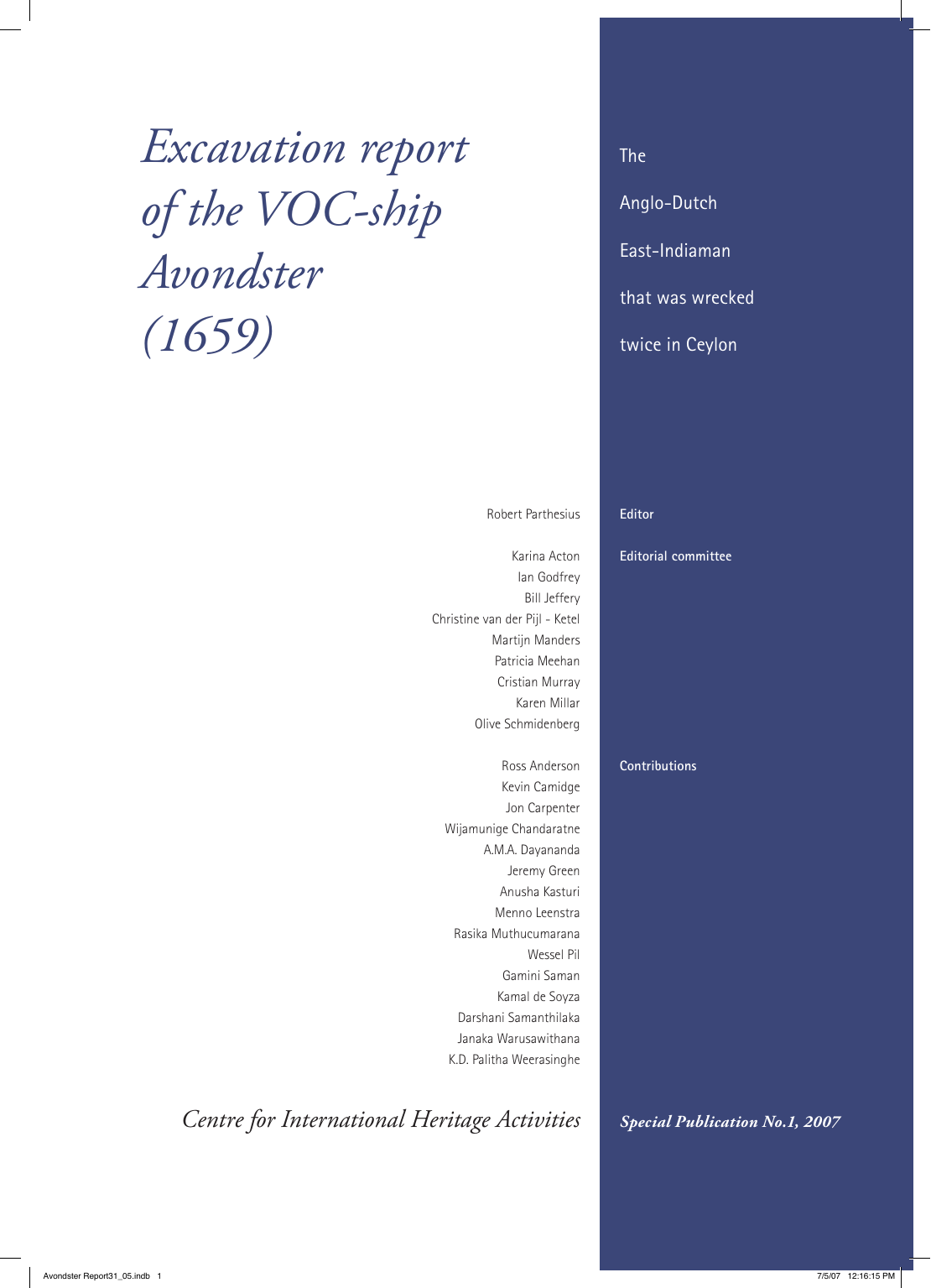
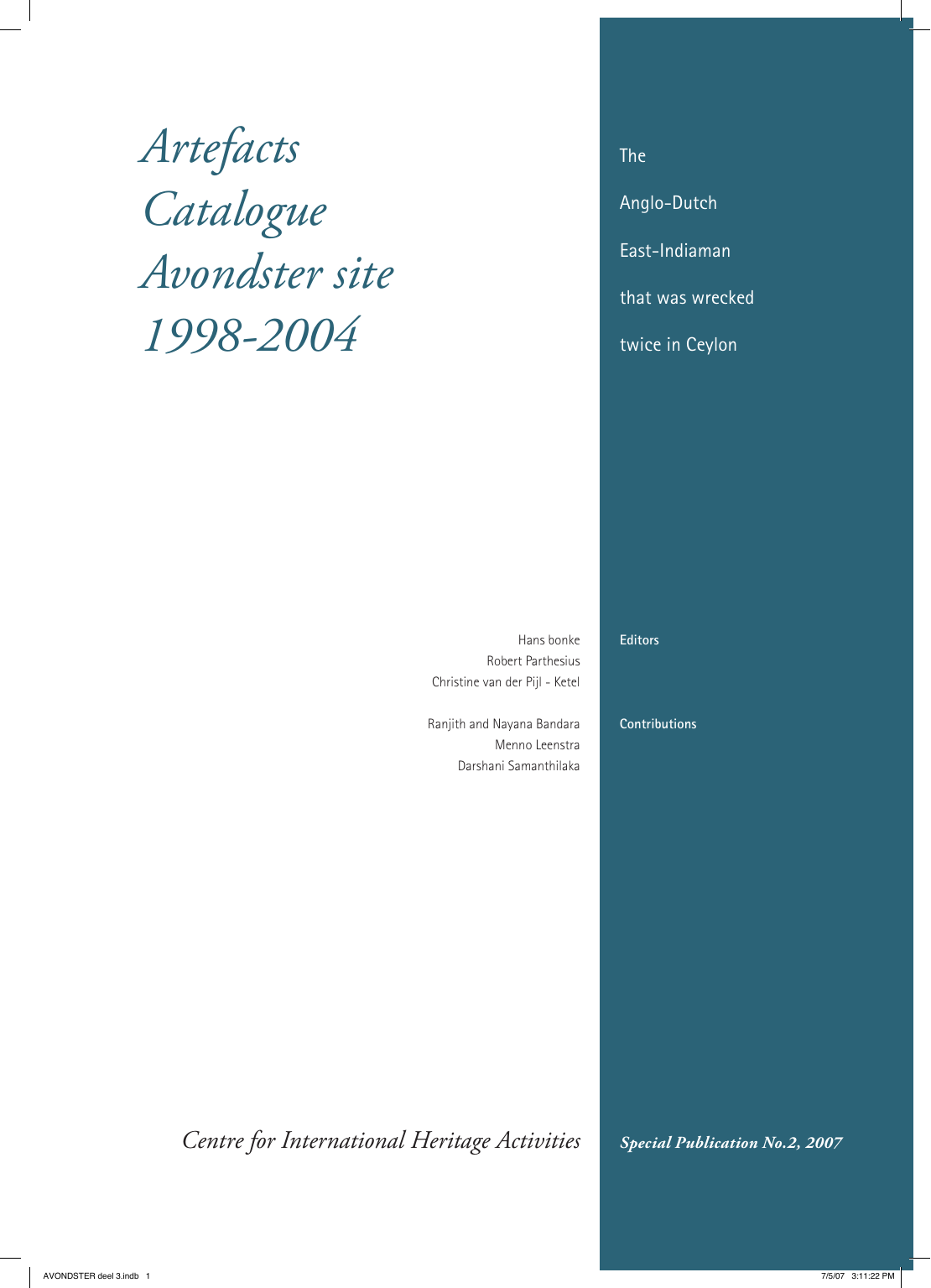
Two-volume CIE publication
The excavation report and artefact catalogue preserve the archaeological record and make the project available for future research.
CIE publications
The project record
The two 2007 volumes are retained in the CIE publication archive.
Living legacy
From one wreck to a wider maritime landscape.
The project helped create the professional and institutional base for later work in Galle and beyond. The Maritime Archaeology Unit and National Maritime Archaeology Museum remain active, while CIE’s relationship with ocean heritage now continues through Global Ocean Heritage.