Maritime Archaeology Unit
A Sri Lankan professional base for site research, field training, documentation and conservation.
 CIE–Centre for International
Sri Lanka · continuing legacy
A continuing institution
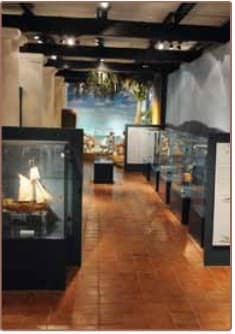
The Avondster programme helped establish the Maritime Archaeology Unit in Galle in 2000 and prepared Sri Lankan specialists to research, document and conserve maritime sites. Museum planning formed part of the same programme: archaeological work would be shared through exhibitions in Galle’s historic Dutch warehouse.
The 2004 tsunami destroyed the MAU premises and severely damaged the museum and its collections. Recovery became a new phase of Sri Lankan–Dutch cooperation. CIE’s contribution included technical coordination, professional exchange, workshops and museum-management study visits rather than ownership of the museum itself.
The museum reopened in 2010 as Sri Lanka’s National Maritime Archaeology Museum. Both the museum and the Maritime Archaeology Unit continue their work today.
Institutional thread
A Sri Lankan professional base for site research, field training, documentation and conservation.
A public setting for shipwreck material, maritime trade histories and the connected cultural landscape of Galle.
Museum-management visits, technical support and regional networks used to strengthen local practice.
An institutional legacy that survives beyond a single excavation and continues to interpret new research.
CIE’s route forward
CIE’s direct work in Galle changed over time, but the programme established relationships and methods that reappeared in later Sri Lanka Heritage Days, shared-heritage field schools and Indian Ocean research.
Within the current website structure, this legacy connects to Global Ocean Heritage: community knowledge, coastal landscapes, maritime research and public interpretation are understood as one field rather than separate projects.
Source route
CIE reports document the Avondster programme, museum exchanges, the 2009 Galle workshop and later field-school work.