Museum teams
Collection care, security, exhibition development and public access in Afghanistan and Sri Lanka.
 CIE–Centre for International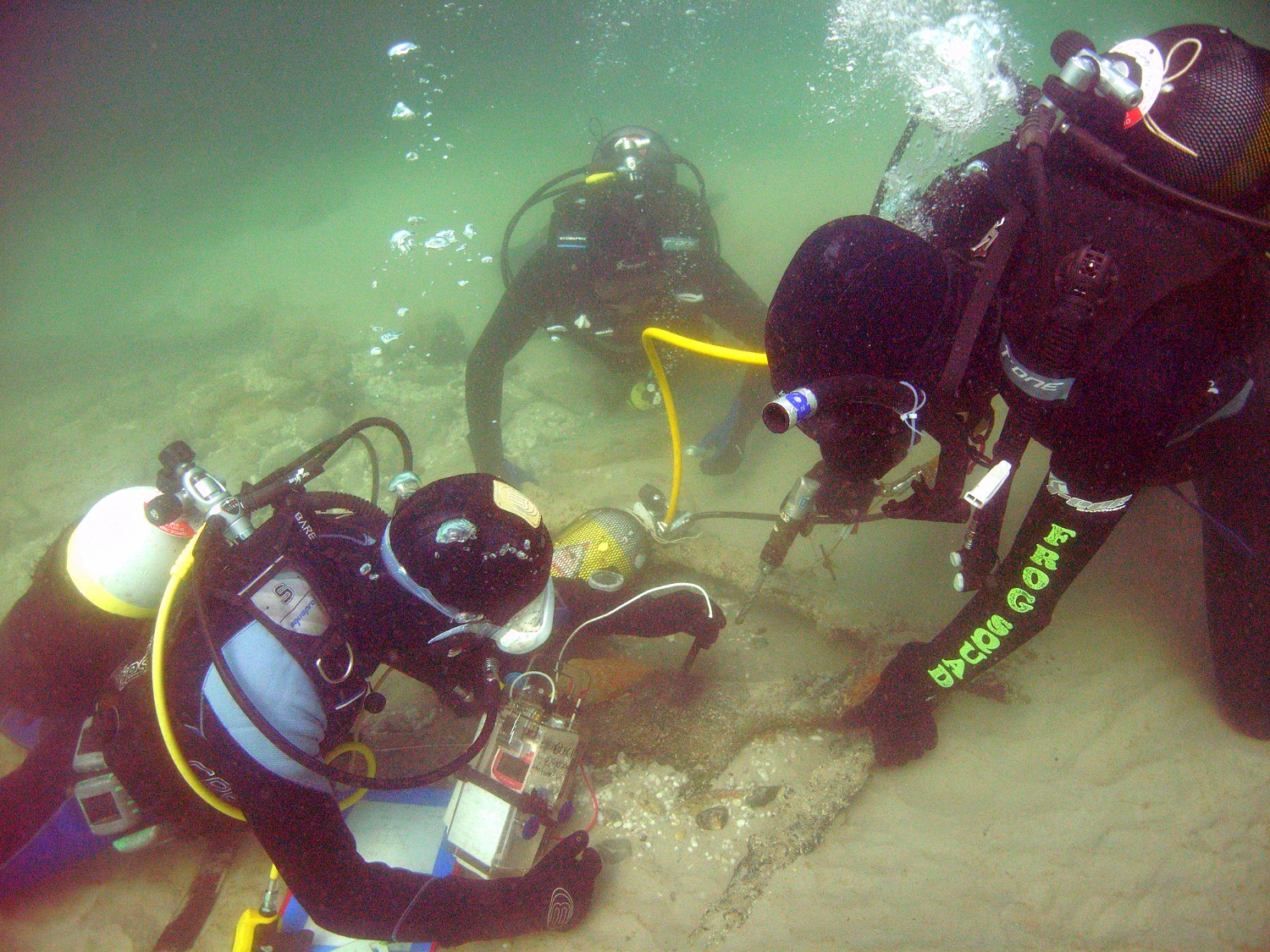
Learning collection · 1998 onward
The learning model
CIE field schools combined structured learning with the responsibilities of a real place. Participants worked with local specialists and communities, documented sites and stories, and connected technical methods with questions of management, public value and ownership.
Not every programme used the same format. Some followed Nautical Archaeology Society levels; others used workshops, surveys, Heritage Impact Assessments, interviews or community documentation. Together they form one learning history rather than a series of isolated courses.
Maritime and underwater learning
Formal field schools and related capacity programmes recorded in CIE annual reports and the former website.
Excavation, conservation, recording and museum practice used to build a Sri Lankan professional team and a basis for regional training.
Open project story ↗NAS theory and field survey, database work, site management and regional workshops linking underwater and terrestrial maritime heritage.
Open field-school story ↗NAS training developed into local survey and documentation, a maritime database, ceramic conservation, museum interpretation and regional exchange.
Open training story ↗A staged programme covering recording, tourism and management, wartime sites and traditional Chamorro fish weirs.
Open field-school story ↗Training and documentation tied to Mafia, Kilwa, Zanzibar and a wider East African regional strategy.
Open programme story ↗Workshops and a 2014 community training programme developed practical protection skills and alternatives to treasure hunting.
Open programme story ↗NYU Abu Dhabi and Leiden University courses combined critical heritage theory, interviews, film and site-based project design.
Open Galle programme story ↗More than field methods
The archive also records teacher training and museum-professional development, particularly within Culture and Development.
Collection care, security, exhibition development and public access in Afghanistan and Sri Lanka.
Heritage for Teachers, Kholm for Kids and South African youth programmes widened the learning network.
Workshops brought practitioners and decision makers together across Southern and East Africa.
University field schools connected critical reflection, field evidence and community dialogue.
Living legacy
Later CIE reports identify the field schools in Zanzibar, Ilha de Moçambique and Robben Island as foundations for HeritageLab. The Hong Kong programme adds another important principle: practical training can enable a local group to organise evidence, public interpretation and its own future work. Today the same commitment to shared learning continues through Heritage EduHub, Co-Labs and Global Ocean Heritage.